• The Year of the Horse 2026 × Hermès

    A Legacy Rooted in Equestrian Elegance. Discover how saddles, harnesses, and horses shaped the world's ultimate luxury brand.

Celebrate the Year of the Horse 2026 with Hermès

With the Year of the Horse arriving in 2026, the spotlight turns to power, elegance, and forward movement. No luxury fashion house embodies these traits quite like Hermès.

While most modern luxury brands chase fleeting trends, Hermès moves at the steady, rhythmic pace of a gallop. It is a house that didn’t start on a runway, but in a stable. For nearly two centuries, the horse has remained the silent partner in every stitch, buckle, and silk scarf produced by the atelier.

As we celebrate the Year of the Horse, we look back at how a humble 19th-century harness workshop evolved into a global symbol of prestige without ever abandoning its first client: the horse.

For the 2026 Chinese New Year, Hermès is celebrating the Year of the Horse, a powerful symbol deeply aligned with the brand’s equestrian heritage. Representing strength, freedom, vitality, and forward momentum, the Horse—especially the Fire Horse of 2026—mirrors Hermès’ legacy of craftsmanship and dynamic movement.

Expect horse motifs, equestrian-inspired designs such as the iconic Rocabar scarf, animated storytelling, and refined campaigns across silk scarves, leather goods, and accessories. Hermès’ Year of the Horse collections highlight tradition meeting modern luxury, honoring the house’s saddle-making origins while embracing elegance, energy, and progress for the new lunar cycle.
A Logo Born from Fine Art

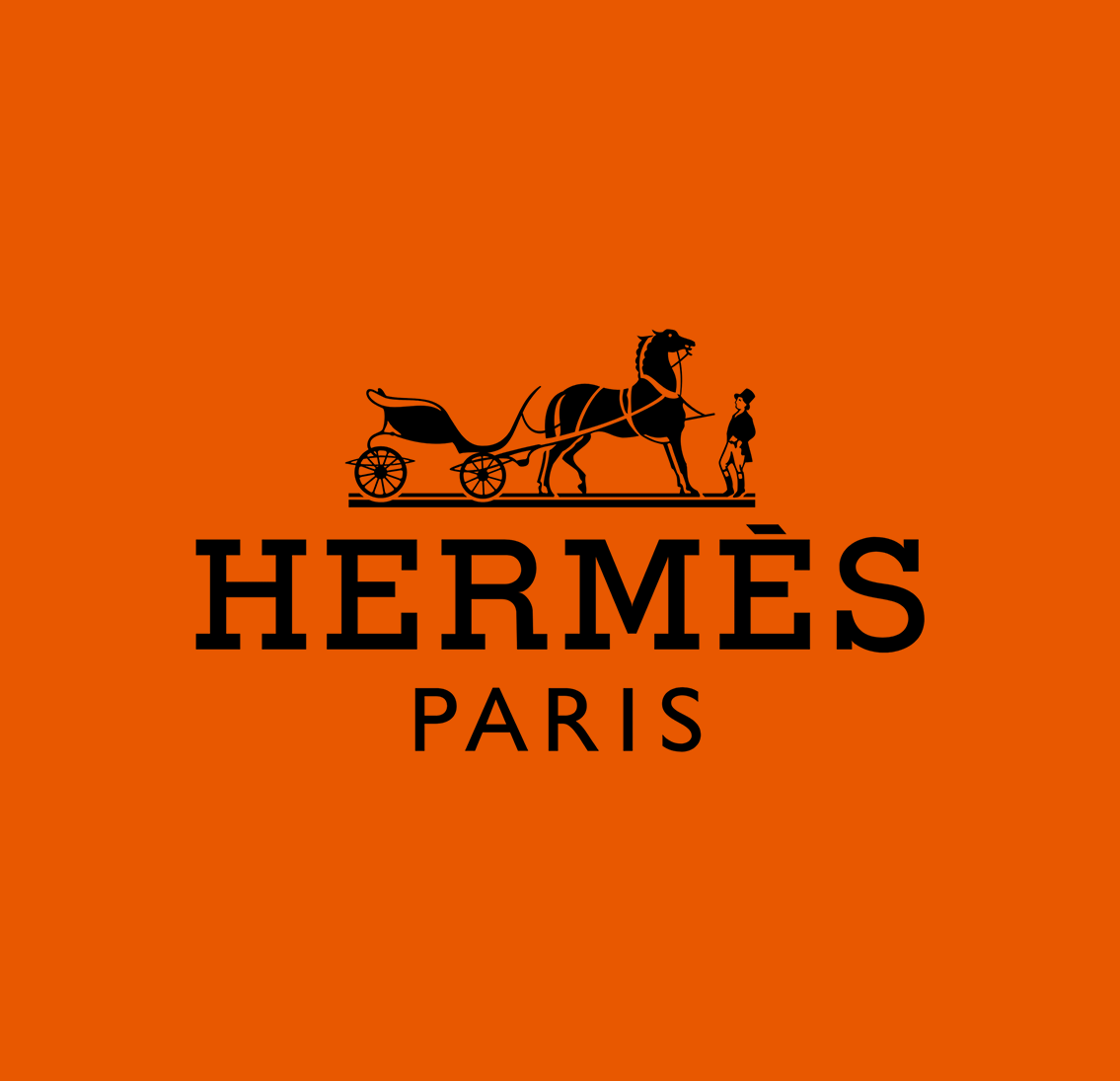
An image of the Hermes logo on their signature color orange.

The Horse Stands Larger Than The Groom

If you look closely at the iconic Hermès logo, you notice a peculiar hierarchy. The horse stands larger than the groom. This isn’t an accidental design choice; it is a declaration of priorities.

The emblem, which Hermès formally adopted around 1950, draws its inspiration from a 19th-century painting titled Le Duc Attelé, Groom à l’Attente by Alfred de Dreux. Émile-Maurice Hermès, a passionate collector, acquired the painting for his personal collection, and its imagery eventually became the face of the brand.

The symbolism is quiet but profound. The groom stands waiting by the carriage, not riding it. This image suggests that Hermès provides the exquisite tools—the harness, the saddle, the carriage—but the client must supply the journey. The horse dominates the frame because, in the eyes of the founders, the animal and its tack were the true stars. It is a visual reminder that before fashion, there was the stable.

The horse is drawn larger than the groom to spotlight the animal and its tack—Hermès’ original craft.

Survival Through Adaptation: From Saddles to Suitcases

The history of Hermès is a lesson in survival. Founded in Paris in 1837, the house originally served Europe’s carriage-driving elite, crafting harnesses and bridles of unmatched quality. But the arrival of the automobile threatened to make their craft obsolete.

When cars replaced horses, the aristocratic riding clientele began to disappear. Many saddlery workshops vanished during this industrial shift. Hermès, however, did not. The house endured by translating its specific set of skills—the durability of the stitch, the quality of the leather—into goods for this new era of travel.

Precision leatherwork once used for bridles found a new life as luxury luggage. The transition was seamless because the principles remained the same. This ability to pivot without losing its soul is why Hermès didn’t vanish with the carriage. Instead, it defined the golden age of travel.

The Ancestors of Icons

The connection between the stable and the boutique is often literal.

  • The Haut à Courroies: Before the Birkin or the Kelly, there was the Haut à Courroies. Originally designed to carry a saddle, this bag is the direct ancestor of the house’s most coveted fashion items.
  • The Evelyne Bag: Today, it is a crossbody staple seen in cities worldwide. But in 1978, Evelyne Bertrand, head of the riding department, created it strictly as a grooming tool. The perforated “H” logo wasn’t for branding; it was designed to face inward to allow damp grooming brushes to dry.
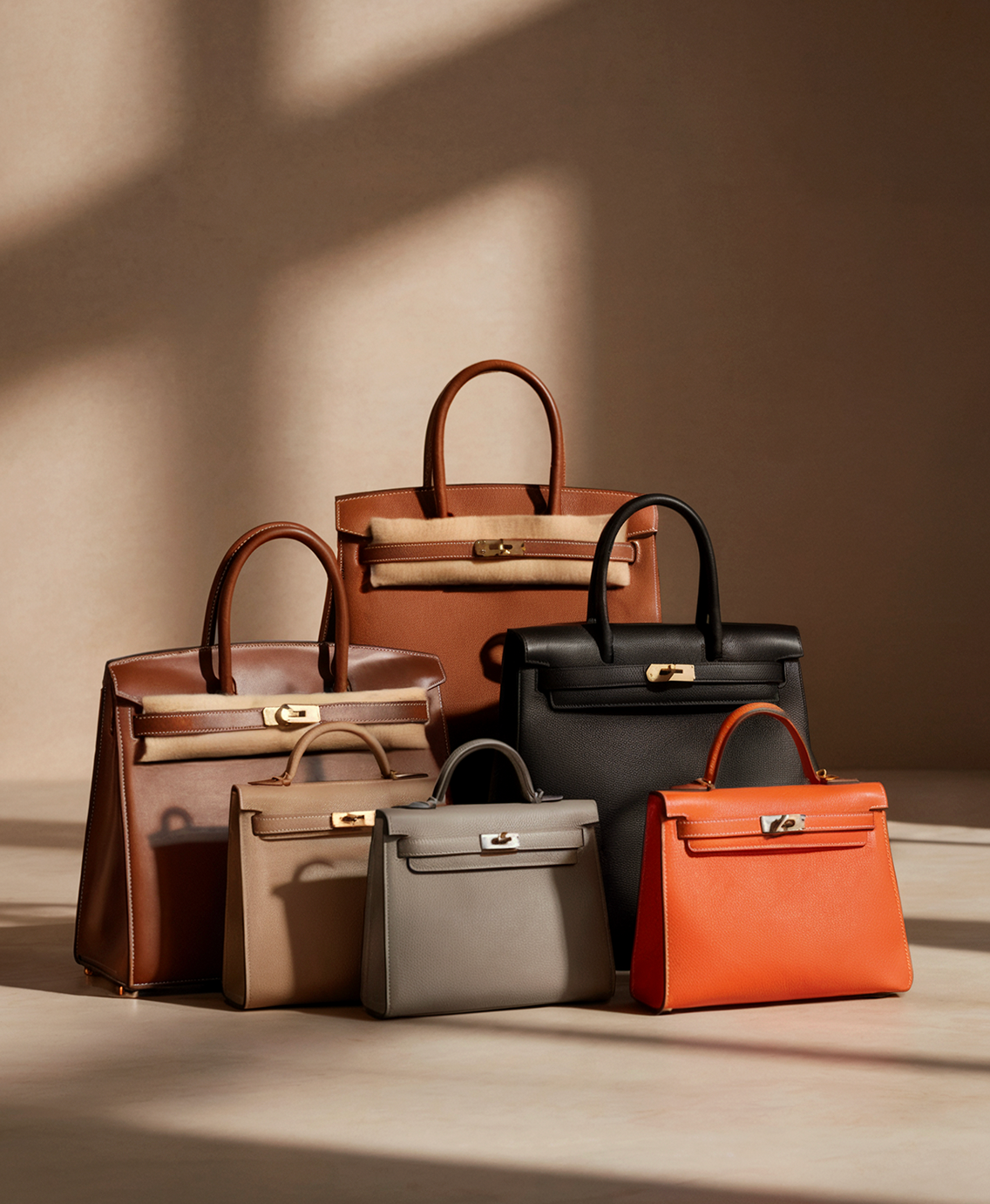
Various Hermes luxury bags in purses

Welcome the Year of the Horse: Strength in Motion

The Year of the Horse ushers in a season of vitality, independence, and elevated energy. Long associated with freedom, elegance, and forward momentum, the Horse symbolizes confidence and purposeful movement—qualities reflected in art, design, and everyday rituals. It’s a time to embrace bold expression while honoring timeless craftsmanship and equestrian heritage. 🕯️ Shop our store, filled with all things equine—from mugs and artwork to home goods and candles—and celebrate the Year of the Horse with pieces that move with meaning.

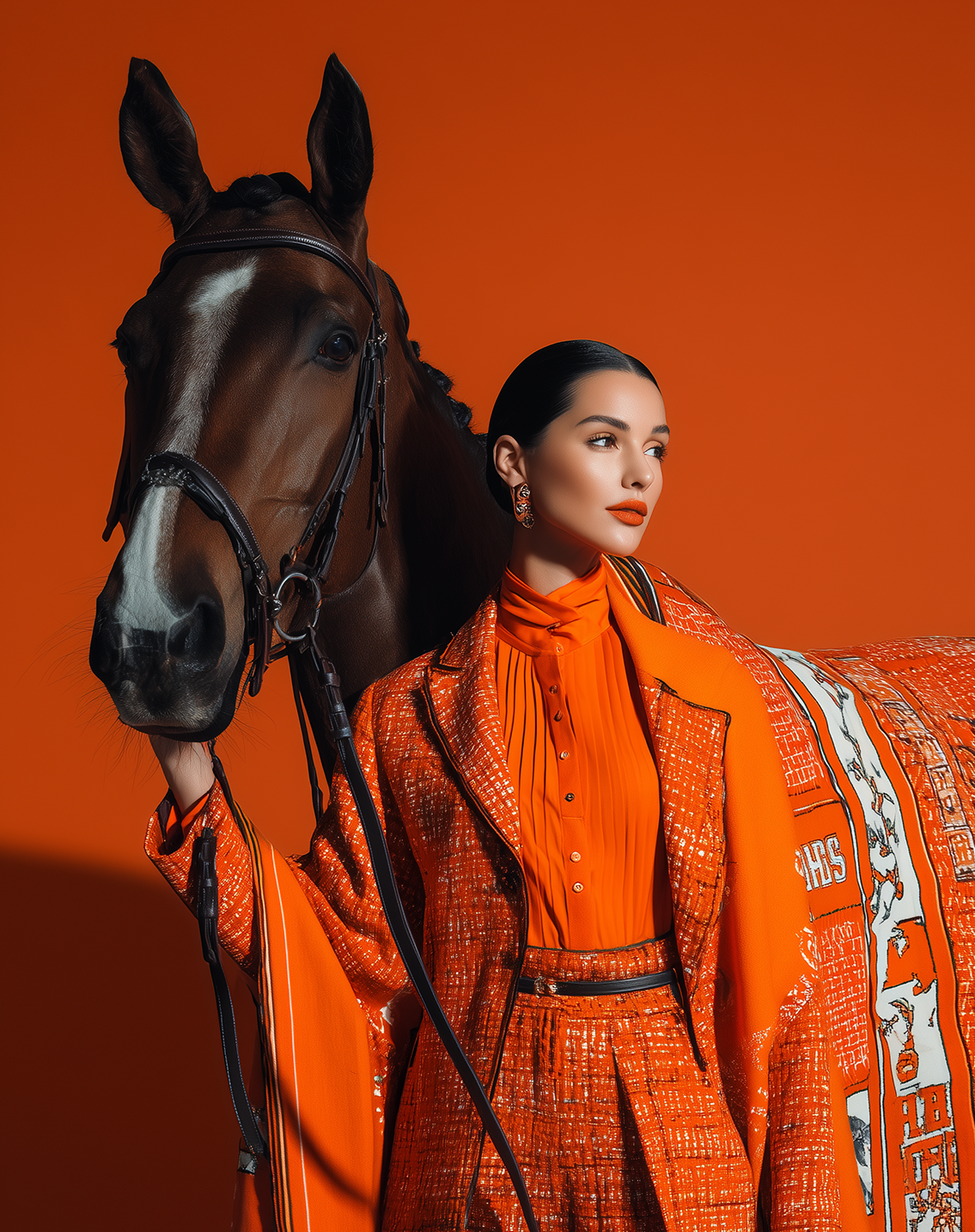
The Philosophy: The Horse is Our First Client

An editorial image in the style of Hermes with a horse and model and signature orange color silks and blanket.

The Pulse of Hermès

At the heart of Hermès lies a guiding philosophy that sounds almost contradictory in the world of high fashion: “The first client is the horse, the second, the rider.”

This rule dictates that function must always come before aesthetics. A saddle must be comfortable for the animal and safe for the rider before it can be beautiful. This obsession with utility bleeds into every other product category. Whether it is a silk scarf or a diamond bracelet, beauty follows function.

Jewelry from the Bridle

The influence of the harness room is undeniable in Hermès jewelry. The famous Filet de selle bracelet, created in 1927, was a miniature version of equestrian hardware. The iconic Chaine d’Ancre and the H bracelet trace their lineage back to bits, buckles, and curbs. These aren’t just shapes; they are mechanical elements refined into ornamentation.

Silk Scarves and Jockey Jackets

Even the famous carré (square silk scarf) has roots on the racetrack. The very first Hermès scarf, released in 1937, drew inspiration from the vibrant silk jackets worn by jockeys. The material was the same—strong, light, and colorful. Designs like La Ronde des Jockeys cemented the link between the thrill of the race and the elegance of the accessory.

Modern Mastery: Bespoke Saddles and the Saut Hermès

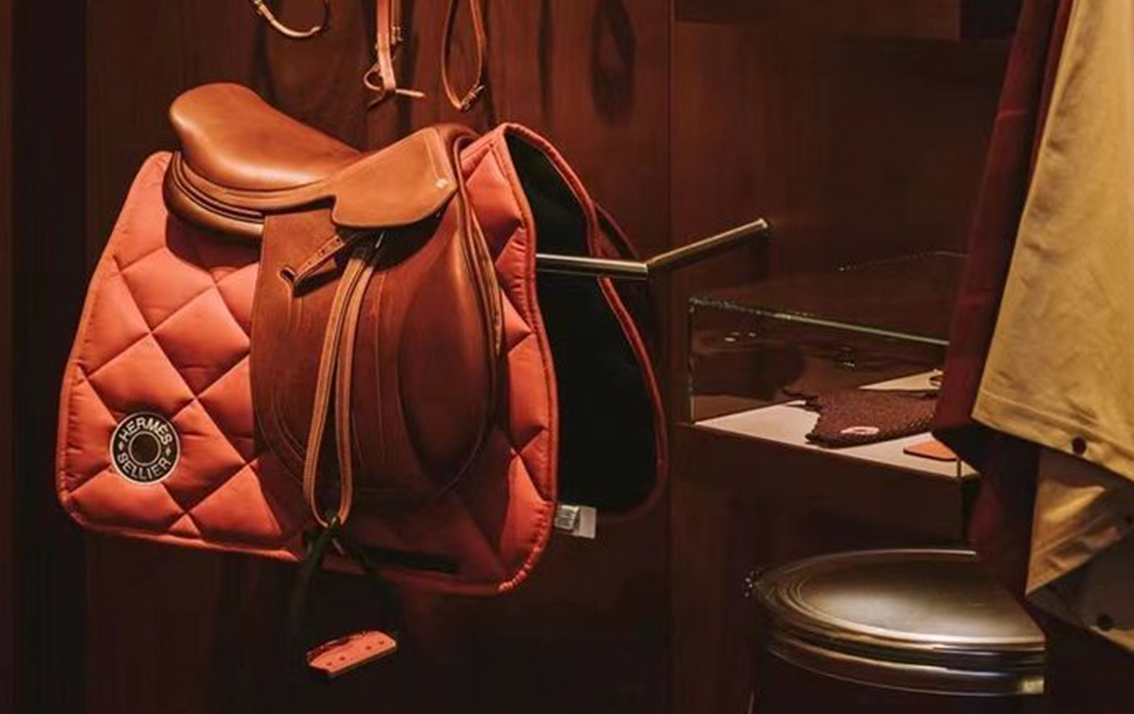
While Hermès is now a giant of luxury fashion, it has never stopped making saddles. In the workshops at 24 Faubourg Saint-Honoré, craftsmen still produce bespoke saddles by hand. They measure the horse and the rider with the same precision a tailor uses for a suit.

This commitment to the sport is celebrated annually at the Saut Hermès. This CSI 5★ international show-jumping competition brings the world’s elite riders to the Grand Palais in Paris. It is a rare moment where the brand’s heritage and its modern existence overlap perfectly.

The house is not just a sponsor; it is a participant, shaped by the very sport it hosts.

Learn more about Hermes saddles and the equestrian line here.

The Orange Box: A Happy Accident

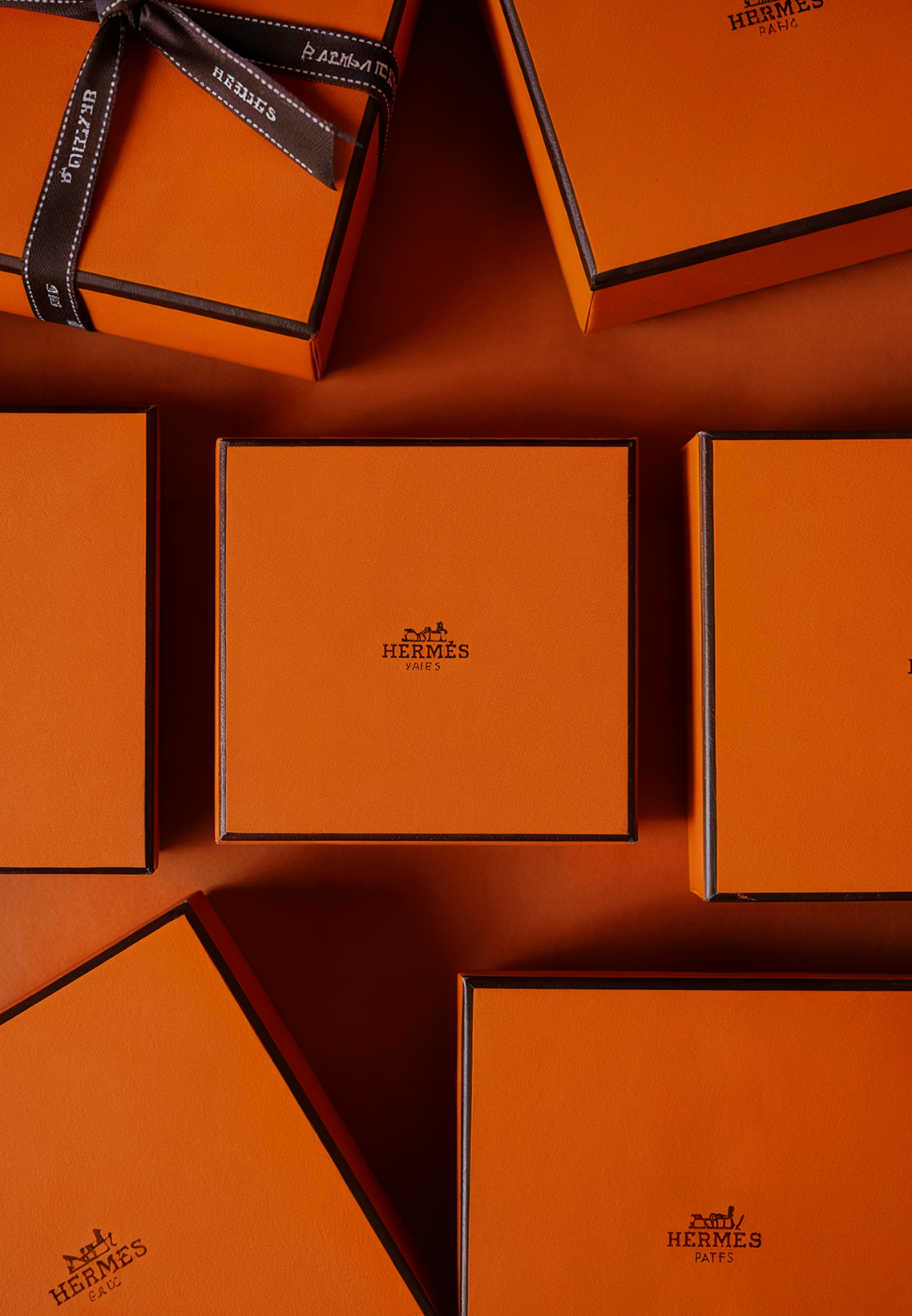
No discussion of Hermès is complete without mentioning the orange box. Interestingly, this symbol of luxury was born from wartime scarcity. During World War II, the original cream-colored packaging became unavailable due to shortages. The only supplier available had a stock of orange cardboard that nobody else wanted.

Hermès used what they had. That proprietary shade, now known as Color #93, became an accidental icon. It is a testament to the brand’s resilience—taking a limitation and turning it into a signature.

Key Themes & Products

  • Equestrian Legacy: The horse is a direct reflection of Hermès’ beginnings as a maker of fine harnesses and saddlery—an enduring pillar of the house’s identity and craftsmanship.

  • Motion & Vitality: The Year of the Horse symbolizes momentum, confidence, and decisive movement, closely mirroring luxury fashion’s emphasis on timeless design paired with understated strength.

  • The Spirit of 2026: This year signals expansion, discovery, and personal evolution, blending heritage with modern expression through bold yet refined creative direction.

  • Product Highlights: Expect equestrian-inspired silk scarves featuring both archival motifs and contemporary reinterpretations, along with the possibility of limited or special-edition pieces celebrating the horse.

Celebrating the Year of the Horse 2026

A Testament to an Enduring Spirit

As we enter the Year of the Horse 2026, Hermès stands as a testament to the animal’s enduring spirit. The brand’s success proves that honoring one’s roots is the best way to grow. By keeping one foot in the stirrup, Hermès ensures that its legacy is never left behind.

From the meticulous saddle stitch to the ventilated H on an Evelyne bag, the story is consistent. It is a story of craftsmanship, adaptation, and a deep, abiding respect for the horse.

For the collector and the admirer, understanding this history changes how you view the brand. You aren’t just buying a bag or a bracelet; you are buying a piece of equipment adapted for modern life. You are buying into a philosophy where the horse is, and always will be, the first client.

As we look ahead to everything the Year of the Horse 2026 will bring, the symbolism feels especially resonant. Across cultures and centuries, the horse has represented freedom, nobility, disciplined power, and refined movement—values that continue to shape luxury design today. In the world of high fashion and craftsmanship, the horse becomes more than imagery; it becomes a narrative thread connecting history, emotion, and aspiration. Few houses embody this more authentically than Hermès, founded in Paris in 1837 on equestrian craftsmanship. From Thierry Hermès’ original harness-making to modern icons like the playful Rodeo bag charm—crafted in Milo lambskin, sometimes featuring authentic horse mane, and even reimagined as a winged Pegasus—these creations channel heritage through elegance and imagination.

How Hermès Connects to the Year of the Horse

Hermès seamlessly connects the Year of the Horse to its brand identity through equestrian-inspired scarf designs and visually striking campaigns. From intricately illustrated silk scarves depicting classic horse scenes to modern, abstract interpretations filled with vibrant color and motion, the horse remains a central artistic motif. Hermès’ campaign imagery blends traditional equestrian symbolism with contemporary art direction, positioning the horse as both a tribute to the house’s heritage and a symbol of forward momentum. Through this balance of craftsmanship, elegance, and movement, Hermès reinforces its enduring connection to equestrianism while celebrating vitality, progress, and refined luxury for the new lunar year.

Key Takeaways

  • Origins: Hermès began in 1837 as a harness workshop, not a fashion house.
  • Symbolism: The logo features a horse larger than the groom to emphasize the animal’s importance.
  • Adaptation: The brand survived the automotive revolution by turning saddlery skills into luggage making.
  • Function: Icons like the Evelyne bag started as functional tools for the stable.
  • Philosophy: Design is guided by the rule that function comes before aesthetics.

As the Lunar New Year inspires renewed creativity, Hermès continues to reinterpret the horse with restraint, artistry, and quiet power. We look forward to seeing how the Year of the Horse unfolds—bringing motion, meaning, and enduring refinement with it.

Year of the Horse 2026: Power, Elegance & Forward Motion

The Year of the Horse arrives with energy, confidence, and unstoppable momentum—celebrating freedom, strength, and refined movement across cultures and design. It’s a year that honors heritage while charging boldly into what’s next, where craftsmanship meets creativity and symbolism becomes lifestyle. From timeless equestrian motifs to modern interpretations of motion and grace, the Horse inspires beauty with purpose.
Shop our store, filled with all things equine—mugs, artwork, home goods, candles, and more—and bring the spirit of the Horse into your everyday life.